Student Loan Relief Explained: Forgiveness, Discharge, and More
Table of content
Student loans rarely feel threatening at first. They arrive quietly, usually tied to optimism: a degree, a plan, a sense that things will work out. Years later, many borrowers realize the loans never left. They simply grew, adjusted, and settled into daily life.
When student loan debt reaches that point, it stops being about spreadsheets and starts affecting real decisions. Career choices. Living arrangements. Even whether it feels safe to slow down for a moment. That’s when people stop asking how to manage and start asking how to get out.
What causes student loan debt to become unmanageable?
It usually isn’t recklessness. Most borrowers don’t wake up one day having “failed” at repayment. The shift is subtle. Interest keeps accumulating. Salaries don’t rise as expected. Life introduces costs that weren’t part of the original plan.
At some point, payments are still being made, but progress disappears. The balance doesn’t move. The pressure does. That’s when the debt quietly changes character.
How does student loan delinquency affect borrowers long term?
Missing a payment doesn’t always feel dramatic in the moment. But student loan delinquency has a way of stretching itself out over years. One missed month becomes several. Notices arrive. Credit takes a hit. Options slowly narrow.
Student loans don’t behave like other debts. They don’t age out quietly. They stay active, persistent, and very patient. The longer delinquency lasts, the harder it becomes to reset without formal help.
What student loan relief options are available today?
The phrase student loan relief gets used loosely, which makes it sound simpler than it is. Relief can mean different things depending on the loan and the borrower. Sometimes it’s a payment adjustment. Sometimes it’s a pause. Sometimes it’s a long-term restructuring that finally allows movement.
The real challenge isn’t finding options. It’s telling the difference between relief that changes the trajectory and relief that simply buys time.
How does student loan forgiveness actually work?
Student loan forgiveness is often talked about as if it’s widely accessible. In reality, it’s tightly structured. Most programs apply only to federal loans and come with long timelines and exact requirements.
For borrowers who qualify, forgiveness can feel like a door finally opening. For others, it becomes a waiting room they never leave. Knowing which category you’re in early matters more than most people realize.
What is student loan discharge and who qualifies?
Student loan discharge is different. It isn’t designed around policy goals or employment choices. It’s rooted in law. Disability. School misconduct. Situations where the obligation itself no longer stands.
Because the criteria are narrow, discharge isn’t common. But when it applies, it’s decisive. There’s no gradual phase-out. The debt is simply no longer enforceable.
Can you discharge student loans through bankruptcy?
For a long time, this question felt rhetorical. The answer was assumed to be no. That assumption no longer holds.
It is possible to discharge student loans through bankruptcy, but it requires an additional legal process and proof of undue hardship. This isn’t automatic, and it isn’t quick. Still, courts today are more willing to look at long-term reality than they were even a decade ago.
When should you speak with a bankruptcy attorney about student loans?
There’s a point where reading another article doesn’t help. Speaking with a bankruptcy attorney becomes useful when student loans are no longer isolated but tangled up with other financial stress.
When progress has stalled for years and informal solutions keep circling back to the same problem, professional guidance can clarify whether bankruptcy is appropriate - or whether another path makes more sense.
What is the best path to student debt relief for your situation?
There is no universal answer to student debt relief. Some borrowers eventually qualify for forgiveness. Others stabilize through repayment changes. In certain cases, the law allows borrowers to discharge student loans, fully or in part.
The right path is the one that reduces pressure instead of reshaping it. For those looking for grounded, lawful guidance on these decisions, DebtStoppers works with borrowers to evaluate realistic options and decide when bankruptcy should be part of the conversation.
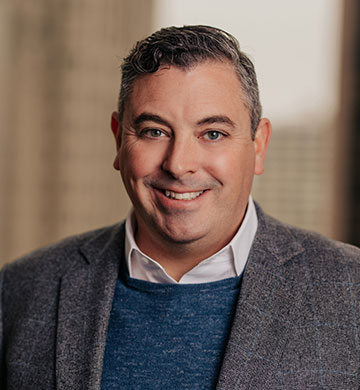
Pat is the Managing Partner of The Semrad Law Firm, which does business as DebtStoppers, the largest consumer law firm in the United States. Patrick concentrates on providing access to affordable legal representation to bankruptcy clients regardless of their income. Since 2004, the firm has grown from four attorneys in Chicago to over 85 attorneys in five states with offices in Europe as well.
Practicing consumer bankruptcy law is a privilege for Pat. He knows of no other area of law that empowers an attorney to make such an immediate positive impact on his clients’ lives. It has been Pat’s mission to foster a team of attorneys and staff who are as passionate about helping individuals and families that are facing financial hardship. In this, Pat views his position as Managing Partner to be a support role dedicated to providing resources and professional development to every employee at DebtStoppers.
Pat periodically volunteers legal services through the North Suburban Legal Aid Clinic and the Together for Childhood Network in Lake County. He advises The Balance Project, a local not-for-profit founded by his wife, Agi, which supports mental health throughout the community.
Pat is a member of the Illinois Bar, Florida Bar, and General Bar for the U.S. District Court for the Northern District of Illinois. Mr. Semrad graduated magna cum laude from DePaul College of Law, where he was a member of the DePaul Law Review. He also received his Bachelor’s degree in Finance from DePaul.
Outside of his professional activities, Pat is an active member of the Windy City Chapter of YPO. He is also an active community member in Highland Park and regularly participates in local events and political campaigns. He enjoys woodworking, sailing, and playing terrible paddle. He is also a member for the Union League Club of Chicago.
Education: J.D., DePaul College of Law · B.S., Finance, DePaul University, 2001